Most of you will never have a problem with these parasites. But, for those of you who do...they are a real pain in the bum!
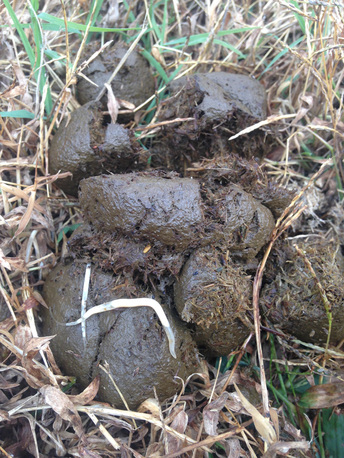
Pinworms are not identified by routine fecal egg counts. The first sign many of you will notice are a few few frazzled hairs at the top of the tail or the characteristic white parasites that taper at each end in the manure.
Fortunately pinworms do not cause a problem to the horse’s digestive system and does not cause internal damage like other worms. However, pinworm can cause severe irritation, sometimes so severe that horses will rub themselves raw around their tail head; this can lead to skin infections and further problems.
Pinworms have the most efficient life cycle of all the parasites that infect the horse. They don't migrate through any organ tissue, and they have developed a means of reproduction by which the eggs don't leave the herd of horses. In order to effectively treat pinworms we must understand the lifecycle.
Treatment should be based on these principles.
*****These parasites do not affect people, dogs, or cats. They are species specific.*****
Pinworms are not identified by routine fecal egg counts. The first sign many of you will notice are a few few frazzled hairs at the top of the tail or the characteristic white parasites that taper at each end in the manure.
Fortunately pinworms do not cause a problem to the horse’s digestive system and does not cause internal damage like other worms. However, pinworm can cause severe irritation, sometimes so severe that horses will rub themselves raw around their tail head; this can lead to skin infections and further problems.
Pinworms have the most efficient life cycle of all the parasites that infect the horse. They don't migrate through any organ tissue, and they have developed a means of reproduction by which the eggs don't leave the herd of horses. In order to effectively treat pinworms we must understand the lifecycle.
- The life cycle is direct; this means there is no intermediate host and no migration through any other organ in the body other than the gut.
- The life cycle is long; worms can take up to 5 months to mature.
- The adult worms live in the rectum, in contrast to other worms which spend their time in the intestines.
- Eggs are laid on the skin surrounding the horse’s bottom and not passed in the feces like other worms.
Treatment should be based on these principles.
- Establish an accurate diagnosis. A "tape test" will identify the eggs collected from the rectum with a piece scotch tape and viewed under a microscope.
- Treat with an oral dewormer that pinworm are sensitive to. Please call for advise.
- Clean your horse’s bottom! The female worms crawl to the anus and lay their eggs during the night, this means the best time to wash your horse’s bottom will be first thing in the morning, twice daily is the gold standard. Make sure to clean under the tail and around the rectum with a mild soap and water. Ivory dish soap works great.
- Apply Vaseline to the skin surrounding your horse’s bottom after cleaning; this will help to reduce the number of eggs that stick to the skin.
- Be patient! The life cycle of the pinworm is long, immature stages of the worm are less sensitive to wormers so may survive post deworming. Most infestations take about 12 months to clear up.
*****These parasites do not affect people, dogs, or cats. They are species specific.*****
 RSS Feed