
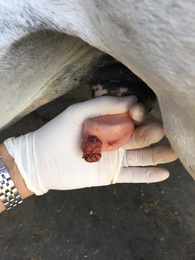
Squamous cell carcinoma is a skin caner that commonly affects horses with pink skin. It generally shows up first in the skin, particularly around the eyes, on the penis or vulva, and in other areas where skin meets mucous membranes. Breeds such as Appaloosa's and Paints that have pink skin are more commonly affected. Unpigmented skin has poor protection from the sun's damaging UV rays, which are a factor in causing this cancer.
As it grows, squamous cell carcinoma can begin to invade surrounding tissues, including the eye or even bone. It can also metastasize to other parts of the body. Early identification and treatment are crucial to a successful outcome.
Signs
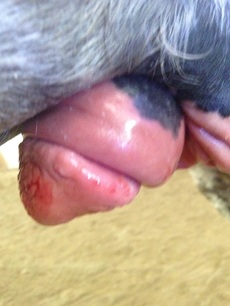
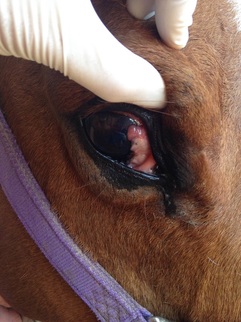
On the skin, a squamous cell growth may look like a small sore or a red, raised bump. Small growths are often easy to spot when they appear around the eyes, where they're often on the inner rim of a lid or in the third eyelid (the membrane at the inner corner of the eye). Tumors in other spots, like the sheath, are more easily missed--look for red, raised sores and sometimes a foul odor.
Treatment
The skin form is treatable. Surgery combined with follow-up treatment is the best option in many cases.
Outlook
Caught early, the outlook is good. If it metastasizes, this cancer can be fatal.
Prevention
Because UV exposure is a factor in this cancer, you can take steps to prevent it:
As it grows, squamous cell carcinoma can begin to invade surrounding tissues, including the eye or even bone. It can also metastasize to other parts of the body. Early identification and treatment are crucial to a successful outcome.
Signs
On the skin, a squamous cell growth may look like a small sore or a red, raised bump. Small growths are often easy to spot when they appear around the eyes, where they're often on the inner rim of a lid or in the third eyelid (the membrane at the inner corner of the eye). Tumors in other spots, like the sheath, are more easily missed--look for red, raised sores and sometimes a foul odor.
Treatment
The skin form is treatable. Surgery combined with follow-up treatment is the best option in many cases.
- Many tumors can be surgically removed. It is important to send the sample to a pathologist to confirm the diagnosis and to assess whether all the cancerous cells were able to be removed.
- Because recurrence is common, chemotherapy may be used as an adjunct treatment. Depending on the area a chemotherapeutic drug may be injected or applied topically.
- Cryotherapy (freezing) is sometimes used for small external growths.
Outlook
Caught early, the outlook is good. If it metastasizes, this cancer can be fatal.
Prevention
Because UV exposure is a factor in this cancer, you can take steps to prevent it:
- Give horses with pink skin on the face or other areas extra protection from the sun. Turn them out at night or with fly masks that shade the areas.
- Clean a gelding's sheath regularly; there's some thought that a buildup of dirt and smegma contributes to cancer there. Have a veterinarian clean the sheath each year to make sure any abnormalities are identified right away.
- Check light-skinned areas regularly and thoroughly to catch this cancer while it's treatable.
 |  |
 RSS Feed